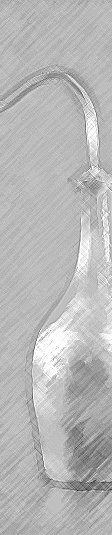

The Leyden jar began to assume the form in which it became widespread when an English physicist covered it with foil on the outside and the abbot Jean Antoine Nollet (1700-1770), a physicist and member of the Paris Academy of Science, replaced the water with thin metallic reeds; but its working was correctly explained only by the German physicist Ulrich Theodor Aepinus (1724-1802) and the American Benjamin Franklin (1706-1790) who demonstrated that equal amounts of charge, but of opposite sign, accumulated in the plates.