

A spring keeps the lever in the rest position with the circuit breaker
open when no current is circulating through the electromagnet. It is clear
that the relay is particularly suited for the transmission of messages
in Morse code; indeed, in the second circuit, electricity circulates
so long as a current is circulating through the electromagnet and if the
electromagnet is connected to a telegraph line, the relay, in concomitance
with a dash of a dispatch will transmit a dash to the receiver and in
concomitance with a dot will transmit a dot. If, with the help of a relay
on the spot, the problem caused by a weak signal in arrival could not
be solved, it was necessary to divide the line into two or more trunks;
also in this case it was necessary to use a relay that would automatically
transmit dispatches from one intermediate station to the next and then
to the receiver.
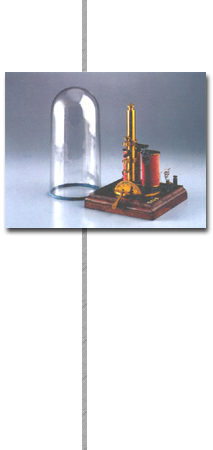
Hipp's relay differs from other relays in use at that time in that the
lever with the mobile armature was equipped with a system of two spiral
springs under different tensions pulling in different directions.
This setup, in which it is the difference in tension of the two springs
that brings the armature into the rest position, greatly decreases the
inertia of the vibrating rod, thus making its movements quicker.
The relay on display here has a square wooden base (14 x 14 cm), an overall
height of 20 cm and is protected by a glass bell. ...continues

